Cockroach Control in Truckee, CA
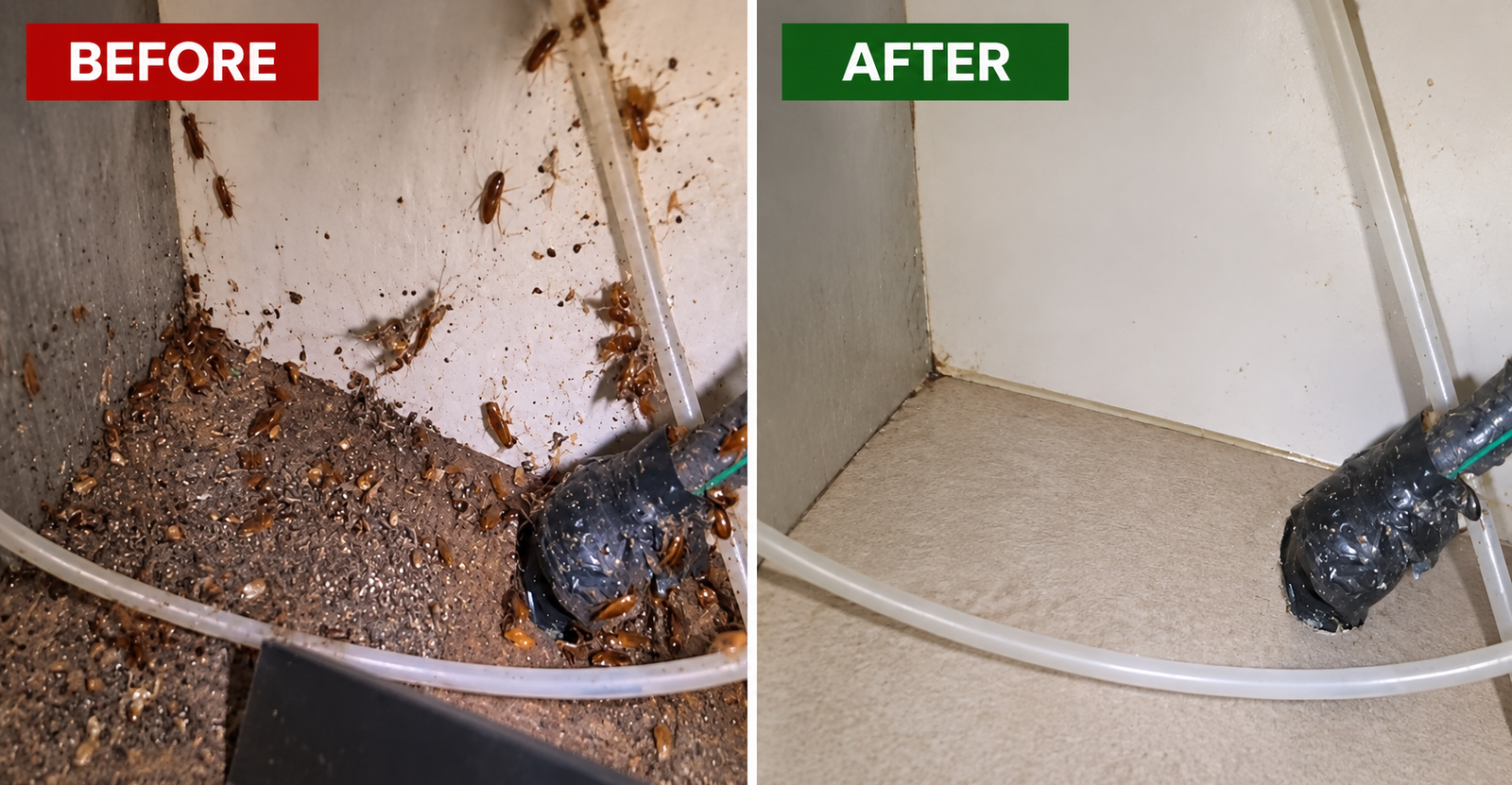
Cockroaches in a home, cabin or rental usually mean they’ve found three things indoors: food, water and a warm, tight place to hide. Effective cockroach control starts with finding where they’re living — often behind appliances, under sinks and inside cabinets — then treating those hiding spots and removing what keeps them there. Spraying the ones you see rarely reaches the rest.
Signs of cockroach activity
Cockroaches are mostly active at night and spend the day hidden, so you may notice signs before you see many roaches.
- Roaches at night: scattering when you switch on a kitchen or bathroom light
- Droppings: small dark specks, like pepper or coffee grounds, in drawers, cabinet corners and along edges
- Egg cases: small brown, capsule-shaped cases in cracks and corners
- Shed skins near hiding spots
- A musty odor in areas with heavier activity
- Daytime sightings, which can mean hiding places are crowded
Where cockroaches hide
Roaches prefer warm, dark, slightly damp spaces close to food and water, where they can squeeze into gaps.
Kitchens and food storage
Behind and under the fridge, stove and dishwasher, inside pantry shelves, cabinet hinges and corners, and around trash and recycling.
Bathrooms and moisture areas
Under sinks, around leaky pipes, behind toilets and in damp laundry areas. Water sources keep them close.
Cracks, voids and appliances
Gaps around pipes and wiring, wall voids, loose baseboards, and the warm motors of small appliances and electronics.
Food, water and shelter
Cockroaches stay where those three needs are met. Crumbs, grease, pet food, open packages and unsealed trash supply food. Dripping taps, damp cabinets and condensation supply water. Clutter, cardboard and small gaps supply shelter.
How cockroaches get in
Cockroaches found in homes are often carried in rather than walking in — in grocery bags, cardboard boxes, used appliances or furniture, and luggage. They can also travel through gaps around pipes and utility lines, especially in buildings with shared walls. Cabins and rentals that see frequent arrivals and deliveries can be exposed more often.
Talk about your cockroach problem
Tell us where you’re seeing roaches and what kind of property it is. Call or request a quote online.
How cockroach control usually works
1. Inspection
Inspection looks for where roaches are concentrated — checking behind appliances, under sinks, inside cabinets and along gaps — and for the food, water and entry points supporting them. Knowing how widespread the activity is shapes the plan.
2. Targeted treatment
Treatment focuses on the hiding places rather than open surfaces. Cockroach baits placed near harborage areas are widely used because roaches eat them and return to their hiding spots. Other targeted products may be applied in cracks and voids. Methods depend on the property and how severe the problem is.
3. Sanitation and follow-up
Cleaning and removing food and water sources make treatment work better and help prevent a rebound. Follow-up is common because eggs inside protective cases can hatch after the first treatment.
Why spraying the roaches you see may not solve it
Most of a cockroach population stays hidden. Spraying visible roaches kills only a few, and some sprays can push others deeper into walls or into other rooms. Egg cases can also survive and hatch later. That’s why lasting control focuses on hiding places, baits and removing what attracts them.
Sanitation and prevention tips
- Wipe counters and stovetops and clean up crumbs and grease daily
- Store food, including pet food, in sealed containers
- Don’t leave dirty dishes or pet food out overnight
- Take out trash regularly and use lidded bins
- Fix dripping taps and leaks under sinks
- Seal gaps around pipes, wiring and baseboards
- Reduce cardboard and clutter in storage areas
- Check boxes, bags and secondhand items before bringing them inside
When professional pest control may help
- You see roaches during the day or in several rooms
- Cleaning and store-bought products haven’t stopped them
- Roaches keep returning after spraying
- You’re finding droppings or egg cases in cabinets and drawers
- A rental or second home needs the problem handled between stays
Cockroach control FAQs
What attracts cockroaches indoors?
Food, water and shelter — crumbs, grease, pet food, trash, leaks, damp cabinets, clutter and cardboard. Removing these makes a home much less attractive to roaches.
Where do cockroaches hide?
In warm, dark, tight spaces near food and water: behind and under appliances, under sinks, inside cabinets and pantry shelves, and in cracks around pipes and baseboards.
Why do I keep seeing cockroaches after spraying?
Spraying usually only reaches roaches in the open. Most stay hidden, eggs can hatch later, and some sprays drive roaches deeper into walls. Treating hiding places and removing food and water sources works better.
How can I reduce conditions that attract cockroaches?
Clean up food and grease daily, store food sealed, fix leaks, take trash out regularly, seal gaps around pipes and reduce clutter and cardboard.
When should I request professional pest-control help?
When roaches keep coming back, you see them in daytime or in several rooms, or you find droppings and egg cases in cabinets. Mention your property type and where you’re seeing them when you call or request a quote.
Request Help With Cockroach Control
Call or describe where you’re seeing cockroaches, your property type and your location in or near Truckee. See the areas covered, or learn about other pest control services in Truckee.